


Approaches in Filtering Theory for optimizing Physics-informed Neural Networks
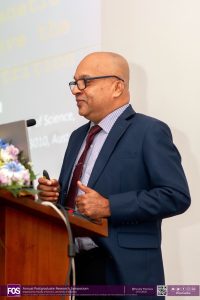
Dr. B.P.W. Fernando
Department of Mathematics
Faculty of Applied Sciences
University of Sri Jayewardenepura
Sri Lanka
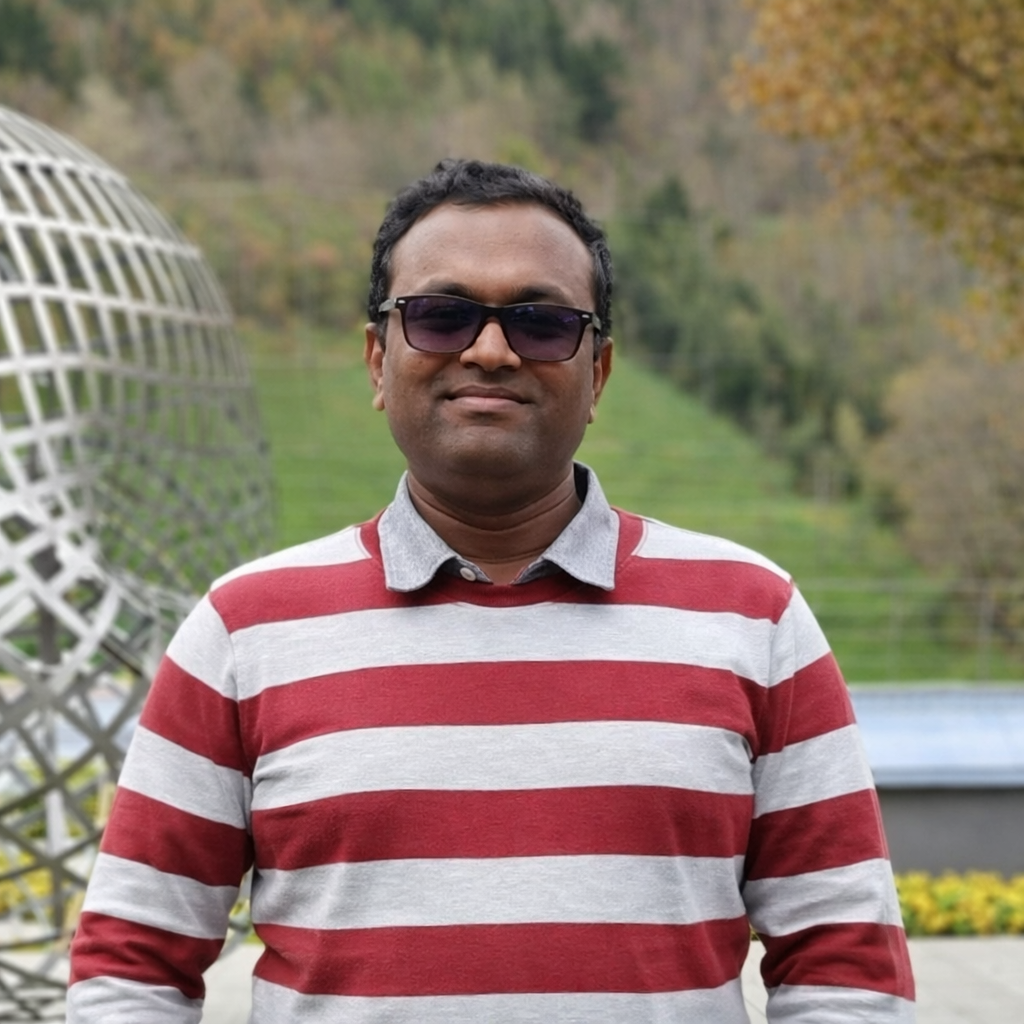
Dr. B.P.W. Fernando earned a First Class Honours Bachelor of Science in Mathematics from the University of Colombo.
He then pursued a Master of Science at the Korea Advanced Institute of Science and Technology (KAIST),
followed by a Ph.D. in Applied Mathematics from the University of Wyoming. His doctoral research,
focusing on the “Stochastic Navier-Stokes equation with Ito-Levy noise,” laid the foundation for his expertise.
He served as a Postdoctoral Associate and Researcher at the University of Leoben in Austria and as an NRC Research
Associate at the Naval Postgraduate School in the United States. His scholarly work encompasses Stochastic Analysis,
Filtering Theory, PDE Theory, and Fluid Dynamics. A dedicated educator, Dr. Fernando has held a position as a Senior
Lecturer at the University of Sri Jayewardenepura since 2018. He is a Guest Professor at the University of Wuppertal
in Germany, where he conducted graduate-level courses on Stochastic Differential Equations and Risk Theory.
ABSTRACT:
The application of machine learning (ML) to solve Partial Differential Equations (PDEs) for boundary value problems
represents a paradigm shift in data-driven techniques in physics. Techniques like Physics-Informed Neural Networks
(PINNs) have gained prominence for their ability to seamlessly integrate physical laws and data. However, a fundamental
challenge arises from the spectral bias of neural networks, which inherently favor learning low-frequency functions.
Input encoding filters, such as Fourier Feature Networks become indispensable for ML optimization, enabling accurate
and efficient solutions. Beyond input encoding, filtering concepts are applied in the loss function and optimization
dynamics. The speaker will provide a hitch-hikers guide towards considerations for applying filtering theory in PINNs.
Computational Data Modelling: Algorithms and Applications
Professor Chee Peng Lim
Department of Computing Technologies
Swinburne University of Technology
Melbourne
Australia
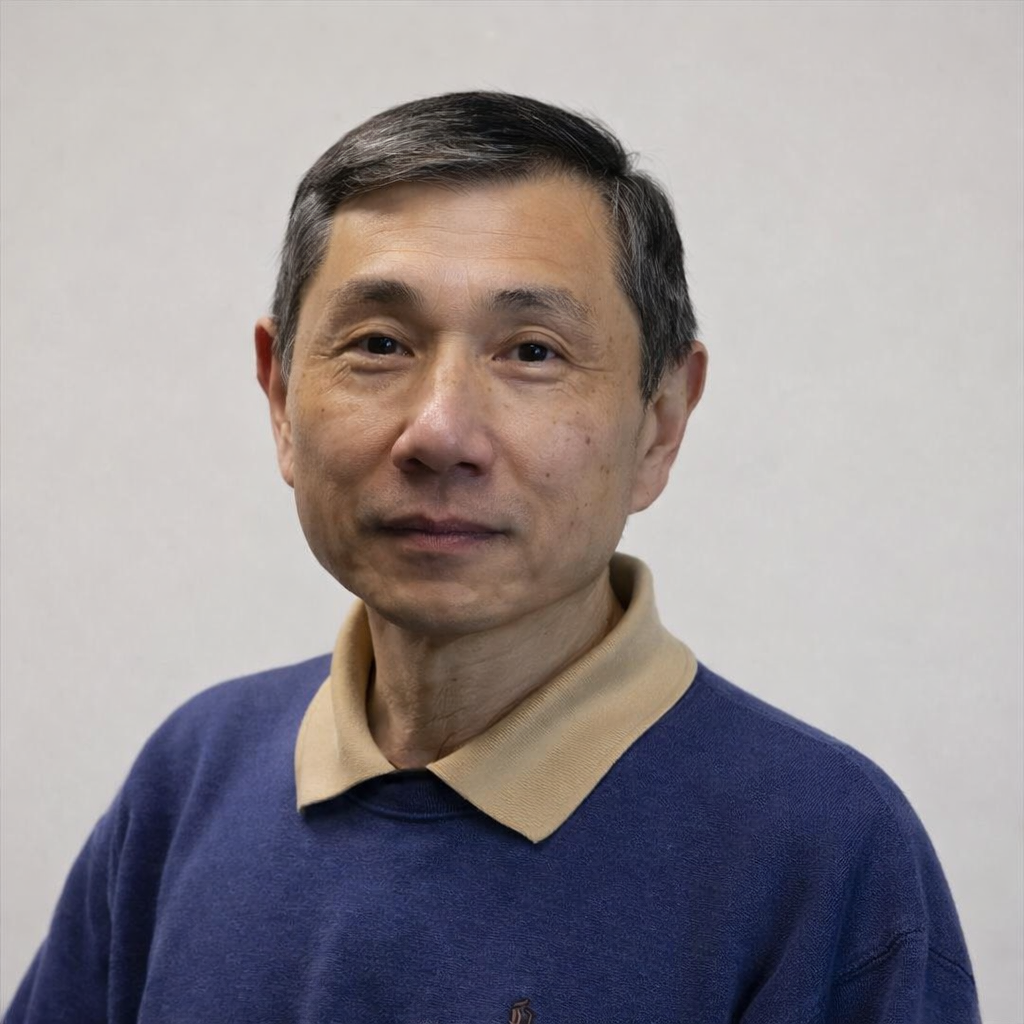
Chee Peng Lim completed his Ph.D. degree at the University of
Sheffield, United Kingdom n 1997. His research focuses on
Computational Intelligence (CI)-based systems for data analytics
and applications. In addition to publishing over 600 publications,
he has received numerous prestigious fellowships for research
collaboration, including Commonwealth Fellowship at the
University of Cambridge, Fulbright Fellowship at the University of
California, Berkeley, as well as Visiting Scientists Program of the
US Office of Naval Research Global at both Harvard University
and Stanford University.
ABSTRACT:
Computational intelligence (CI) offers mathematically grounded approaches to
addressing data analytics problems through adaptive algorithms that comprise clustering,
classification and function approximation principles. This talk presents CI algorithms for
data modelling and analytics and their application to real-world medical and industrial
problems
Computational Data Modelling: Algorithms and Applications
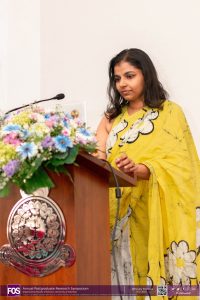
Savini Bandaranayake
Postdoctoral Scholar
Combustion Research Facility,
Sandia National Laboratories,
California, USA

CSavini Bandaranayake received her B.Sc. degree in
Computational Chemistry from University of Colombo and
completed her Ph.D. in Physical Chemistry at The Ohio State
University in 2022. Her doctoral research focused on ultrafast
photoexcited state dynamics in transition metal oxides and the
development of advanced ultrafast spectroscopy techniques.
Since 2023, she has been a Postdoctoral Scholar at Sandia
National Laboratories, studying non-adiabatic dynamics in
molecular systems following photoexcitation, using ultrafast Xray, UV-visible and IR spectroscopy techniques.
ABSTRACT:
Harnessing solar energy to drive chemical reactions play a vital role in
sustainable innovation and fundamental understanding of light-matter interactions
remain crucial for progress. Heterogeneous photocatalysis is one such example that
shows potential to convert solar energy to chemical energy. Upon photoexcitation,
charge carriers are generated within the catalyst, which can follow multiple competing
pathways that determine the efficiency and selectivity of the reaction. Many of these
processes occur in the ultrafast time regime, accessible only through the recent
advancement of transient spectroscopy techniques. Extreme Ultraviolet (XUV) transient
absorption spectroscopy is one such powerful method capable of probing charge carrier
dynamics with element and site specificity, with a time resolution < 100 fs, in a laboratory
setting. In this talk, I will present transient XUV studies on hematite, (α-Fe₂O₃), a model
photocatalyst for water splitting. These measurements reveal that polaron formation
occurs within < 1 ps after photoexcitation, lowering the efficiency by trapping charge
carriers. Furthermore, surface functionalization with self-assembled monolayers can be
used to modulate charge transfer dynamics in hematite. Observing electron motion in
real time provide insights into intrinsic properties of materials, crucial for the design and
synthesis of better performing photocatalysts. Thus, continued development of ultrafast
techniques is key to advancing our understanding of photochemical processes.
Computational Data Modelling: Algorithms and Applications
Professor Mahua Mukherjee
Head & Professor, Department of Architecture & Planning
Joint Faculty and Ex-Head, Centre of Excellence in Disaster Mitigation and Management,
IIT Roorkee,
INDIA
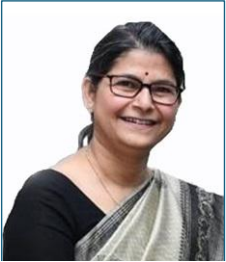
Prof. Mahua Mukherjee is a Professor and Head at the
Department of Architecture and Planning, IIT Roorkee, and former
Head of the Centre of Excellence in Disaster Mitigation and
Management. A Fulbright Postdoctoral Fellow from Penn State
University, she has over three decades of teaching, research, and
professional experience. Her expertise spans sustainable
architecture, urban climate, and disaster resilience, with
extensive national and international contributions to research,
training, and policy.
ABSTRACT:
The presentation introduces Nature-based Solutions (NbS) through the “NbS Umbrella
Concept,” which organizes actions into four pillars: Strategic, Spatial Planning,
Engineering, and Socio-Economic Performance. It aims to clarify what falls under NbS and
inspire future urban applications by showcasing six successful South Asian examples.
Each case study is linked to specific NbS pillars, revealing a contextual change in
application and highlighting how it fosters climate resilience, disaster risk reduction and
ecosystem health.