
Home » Research » Research Symposium » Postgraduate Research Symposium 2021

Impactful Research Through Interdisciplinary Approach

Postgraduate Research Symposium 2021

THEME: Impactful Research Through Interdisciplinary Approach

The Technical Sessions of the Faculty of Science, organized as part of the Annual Research Symposium 2021 of the University of Colombo, was successfully held on 25 th and 26 th November 2021. These sessions were a part of the International Conference on Multidisciplinary Approaches in Science 2021 (ICMAS), held under the theme ‘Basic sciences: Breaking down silos to foster cross- disciplinary research’.

At this session, 37 abstracts were presented by postgraduate students/academic staff of the Faculty of Science. The presentations were held on a virtual platform and drew wide interest from both academic members and postgraduate students.

In keeping with the vision of the Faculty of Science to produce postgraduates that are distinguished by their professionalism, committed to ongoing learning and personal development, confident and adaptable and able to aptly communicate and blend into the wider contexts in which they work, we strive to equip them to be competitive, effective and productive.

As a faculty that focuses heavily on research and innovation, we encourage research dissemination and take initiatives to show case and reward research efforts. The technical sessions of the faculty of science in 2021 focusing on “Research applications of national importance’ was held on the 24th of November 2021 from 1 p.m. onwards. This was conducted as part of the ICMAS sessions.

The presented talks were different from those presented before, in that it targeted a wider audience from educational entities, from industries and also the general public as the presented findings were important in terms of national development.

An interactive discussion was facilitated by an eminent panel of experts including Dr. Ruchira Wijesena a Senior Scientist at the Sri Lanka Institute of Nanotechnology (SLINTEC); Dr GAS Premakumara who is the Head of the Dept. of Basic Sciences & Social Science, Faculty of Nursing, University of Colombo; Dr. Chithraka Wickramarachchi a Senior Lecturer in the Department of Statistics, University of Sri Jayewardenepura; Prof. I.G.N. Hewajulige, Additional Director and Research Professor, Research and Development Division at the Industrial Technology Institute (ITI) of Sri Lanka.

A total of 16 interesting talks were presented at these sessions.

  • Development of advanced filter materials for water purification
  • Development of Kajjali loaded electro spun fibre mats for wound care
  • Smart nanofibrous textiles for skin care applications: A solution for cancer and aging
  • Conserving our neritic tuna resources for future generations
  • Ensuring human health and food security through novel cereal and fruit-based probiotics
  • Molecular discovery: Bioactive cyclotides and secondary metabolites from Sri Lankan medicinal plants
  • In-silico study on effectiveness of antidiabetic properties of active compounds of bitter gourd and enhancing these properties through processing methods
  • Bioactive properties of finger millet varieties cultivated in Sri Lanka
  • Novel herbal formulations for rejuvenation and weight loss
  • Development of recombinant bacterial strains for effluent metal bioremediation
  • Microbe-assisted value addition to Eppawala Rock Phosphate: A possible replacement to TSP
  • Achieving the country’s rice production with 50% less urea – through a microbial biofertilizer
  • A dynamic model for Load Forecasting: Two level Neuro-Functional Load Forecaster
  • A study of employment among Arts Graduates in Sri Lanka
  • Risk Assessment Model for deliberate introduction of Invasive Alien Plant species in Sri Lanka
  • Mathematical modeling of Dengue Virus dynamics

The synopsis of these talks were published in the ICMAS proceedings.

The highlights of the inauguration included the keynote speech delivered by Prof. Saman Senaweera, Honorary Professor, University of Melbourne, Australia, on the topic “Biofortification of Cereals: Unlocking the Genetic Pathways to Achieve Global Zinc Malnutrition.” This was followed by two invited presentations delivered by young academics of the faculty: Dr. Kalpani Marasinghe (“Multidisciplinary Marine Science for Human Resilience: From Ecosystem Understanding to Innovation and Sustainable Utilization”) and Dr. Muditha Bandara (“Individual MRI for Human-Centric Personalized Medicine”).

In the latter sessions of the technical program, 31 postgraduate students and academics of the faculty presented their research under four tracks: (1) Physics (2) Mathematics, Statistics and Nuclear Science (3) Chemistry and (4) Biological Science. Each track was enriched by a guest speaker who delivered valuable presentations covering diverse subject areas.

Keynote Speakers
Seminar Talk
Human Capital, Employment and Economic Empowerment
Dr. Harsha Aturupane Lead Economist World Bank
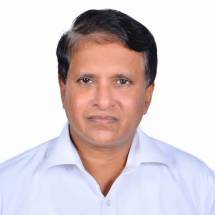
Dr. Harsha Aturupane
Dr. Harsha Aturupane is a Lead Economist in the World Bank. He has worked and written extensively in the fields of human development, education economics, higher education, general education, labor economics, welfare economics, and poverty reduction. He has led teams in the preparation and supervision of World Bank projects and programs covering higher education, general education, health, social protection, economic reform, and strengthening governance processes. His work experience covers the East Asia, South Asia, Europe and Central Asia, Middle East and North Africa, East Africa, and West Africa regions of the World Bank. He has a Ph.D. and M.Phil. in Economics from the University of Cambridge and a B.A. in Economics and Diploma in Economic Development from the University of Colombo.
ABSTRACT:
The global economy is now experiencing the Fourth Industrial Revolution. The first Industrial Revolution was based on mechanical production, while the second saw the widespread application of electricity and mass production. The third Industrial Revolution introduced automation, electronics, and computers. The fourth industrial revolution is driven by artificial intelligence, big data, robotics, biotechnology, and neuro-technologies, transforming the nature of economic production and employment. Technological changes affect jobs in three major ways: some jobs disappear due to automation, many jobs evolve requiring new skills, and entirely new jobs emerge. Human capital development therefore needs continuous transformation to meet changing skill demands. The demand for advanced cognitive and socio-emotional skills is increasing, while demand for easily automated skills is declining. Education and training systems must adapt curricula, teaching, learning, and assessment methods to support these changes. Lifelong learning systems are increasingly essential as future careers require repeated adaptation to new technologies and skills. Personality traits and socio-emotional skills also play a major role in educational and labor market success. Traits such as conscientiousness, openness to experience, emotional stability, and perseverance significantly influence productivity, innovation, and employment outcomes. The education system can promote socio-emotional skills through quality early childhood education, improved school systems, effective vocational training, accessible higher education, and efficient lifelong learning opportunities. Economic policies that support markets, innovation, and international openness are essential for productive human capital development. The keynote also highlights the importance of democracy, ethics, social values, and shared norms in supporting innovation, economic prosperity, and sustainable development.